
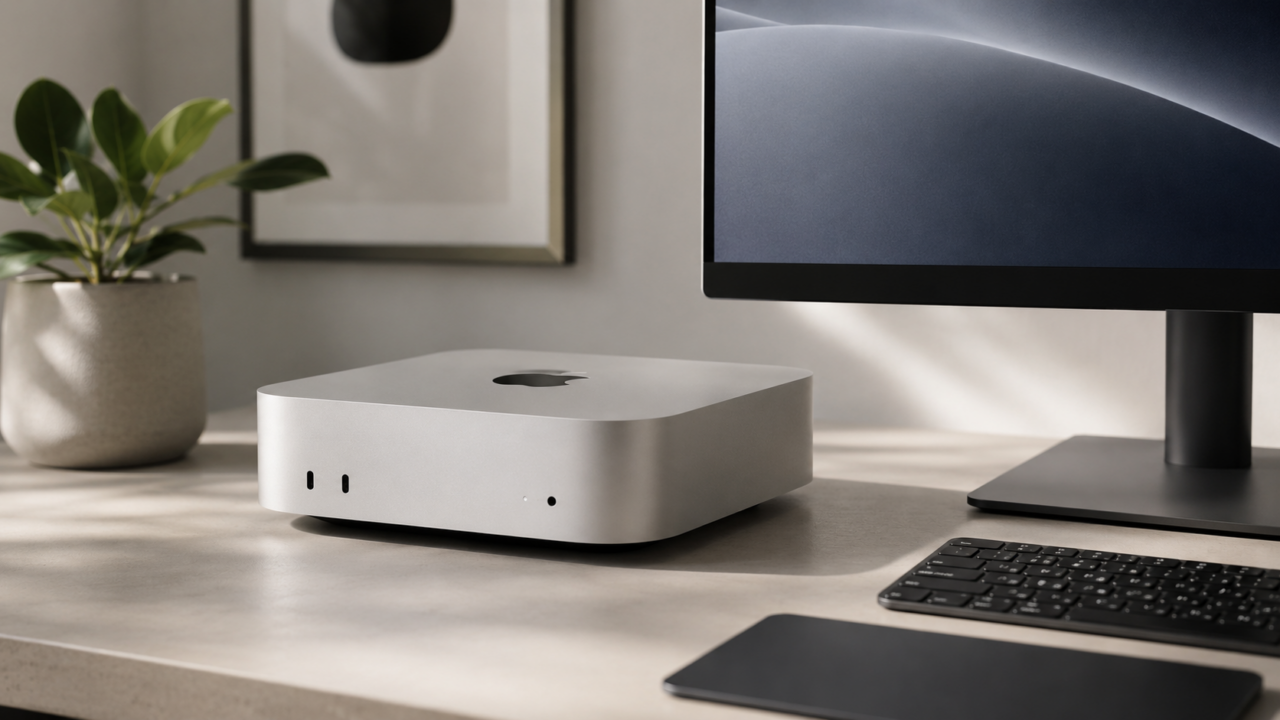
Apple’s Mac mini is facing one of its most visible supply crunches in years, with popular configurations showing extended delivery estimates and higher-memory models becoming harder to buy directly from Apple.
Recent Apple Store availability checks reported by major Apple news outlets show that the 512GB M4 Mac mini, now Apple’s lowest-priced Mac mini configuration, has been backordered into June. Higher-end Mac mini and Mac Studio configurations have faced much longer wait times, with some memory-heavy models quoted at several weeks or even months, depending on the configuration.
The shortage comes at an important moment for Apple’s desktop lineup. The company recently removed the $599 Mac mini with 256GB of storage, leaving the 512GB version as the new entry point. Apple’s current Mac mini purchase page now lists 512GB storage as the lowest available storage option for the M4 Mac mini lineup.
That change means the Mac mini effectively now starts at $799 in the U.S., up from the previous $599 entry point. Apple did not raise the price of the 512GB model itself, but by removing the lower-cost 256GB configuration, the cheapest available Mac mini from Apple now costs $200 more than before.
Mac mini availability is tightening
The Mac mini has long been one of Apple’s most attractive entry points into the Mac ecosystem. It is compact, quiet, powerful, and relatively affordable compared with MacBook Pro, Mac Studio, and iMac options. But that value has made it especially vulnerable to a demand spike.
According to 9to5Mac, the 512GB M4 Mac mini with 16GB of unified memory was backordered into the second or third week of June in early May. The same report said several higher-end Mac mini configurations were listed as “currently unavailable,” while others showed delivery times of 10 to 12 weeks.
MacRumors also reported that some Mac mini and Mac Studio configurations with upgraded memory were showing delivery estimates as long as four to five months. One example cited was an M4 Pro Mac mini with 64GB of RAM showing a 16- to 18-week shipping window through Apple’s U.S. online store.
The delays are not limited to the Mac mini. Mac Studio configurations have also been affected, especially models with large unified memory options. Apple has removed or reduced availability for several higher-memory Mac Studio and Mac mini configurations as the memory shortage continues to pressure supply.
Why is demand rising
A major reason for the Mac mini’s sudden scarcity is its growing popularity beyond traditional desktop users.
Apple CEO Tim Cook said during Apple’s Q2 earnings call that the Mac mini and Mac Studio are seeing stronger-than-expected interest because customers are recognizing them as strong platforms for AI and agentic tools. He said customer recognition was outpacing Apple’s predictions, creating higher-than-expected demand.
That shift matters because Apple Silicon Macs are increasingly being used by developers, small teams, and AI enthusiasts for local AI workloads. The Mac mini is especially attractive for this use case because it is small, efficient, quiet, and available with unified memory configurations that can support demanding local workflows better than many entry-level desktops.
TechCrunch reported that Apple was surprised by AI-driven demand for Macs, with Cook saying it may take several months for Apple to reach a supply-demand balance on Mac mini and Mac Studio models.
Enterprise demand also appears to be part of the trend. Apple has pointed to companies such as Perplexity choosing Mac as a platform for building enterprise-grade AI assistants, highlighting the appeal of Apple Silicon and unified memory for AI workflows.
The memory shortage is making the problem worse
The demand spike is only part of the story. The Mac mini shortage is also tied to a broader global memory crunch that is affecting PCs, smartphones, servers, and other consumer electronics.
TrendForce reported that intense competition for limited DRAM supply pushed server DRAM contract prices up by around 90% quarter-over-quarter in Q1 2026. The firm also said LPDDR4X and LPDDR5X contract prices were expected to surge by around 90% quarter-over-quarter, marking some of the steepest increases in their history.
IDC has described the current memory shortage as a major pressure point for the smartphone and PC markets in 2026. The firm said AI infrastructure demand is pulling manufacturing capacity toward high-bandwidth memory and high-capacity memory products used in data centers, leaving less supply available for consumer devices.
That is a problem for Apple because modern Macs use unified memory, and higher-memory configurations are now some of the most desirable options for developers, creators, and AI users. When memory supply tightens, the pressure shows up first in machines with larger RAM configurations, which explains why high-memory Mac mini and Mac Studio models are facing the longest delays.
Apple removed the 256GB Mac mini
The most visible change for everyday buyers is Apple’s removal of the 256GB Mac mini configuration.
The 256GB M4 Mac mini was previously Apple’s $599 entry-level desktop. It gave buyers a relatively affordable way to get into Apple Silicon without buying a laptop or a more expensive desktop. But after being listed as unavailable, the model disappeared from Apple’s online configurator entirely.
The Mac mini now starts at 512GB of storage, which improves the base storage experience but raises the minimum price for anyone buying new directly from Apple. For buyers who only needed a simple desktop Mac for school, office work, browsing, media, or light creative use, the Mac mini is no longer the same $599 value play it was before.
This also changes the buying decision in the used and refurbished market. A used 256GB M4 Mac mini may now look more attractive to budget buyers, but only if the price is reasonable. If used 256GB models are selling close to or above the price of a new 512GB model, buyers should be careful.
Used Mac mini prices are reacting
The secondary market has already started to respond to the shortage.
TechCrunch reported that M4 Mac mini listings were appearing on eBay at prices above Apple’s original retail pricing. Some open-box base models with 16GB of RAM and 256GB of storage were listed at around $715 to $795, while some refurbished or excellent-condition examples were priced even higher.
That kind of pricing usually happens when a popular Apple product becomes difficult to buy new. Buyers who need a device quickly move to eBay, refurbished marketplaces, or local sellers. Sellers then raise prices, especially for models that are no longer available directly from Apple.
For buyers, this creates a risk. Paying above original retail for a used Mac mini may make sense for someone who urgently needs a specific configuration, but most shoppers should compare the total value carefully. Warranty status, storage, memory, AppleCare eligibility, return policy, cosmetic condition, and seller reputation matter more when prices are inflated.
What buyers should do now?
Mac mini buyers should avoid rushing into an overpriced listing just because Apple’s delivery estimates are longer than usual.
The first step is to check Apple’s own store for both delivery and local pickup. Apple notes that delivery and pickup options depend on product availability, location, and selected configuration. Some customized Mac selections can affect delivery estimates.
The second step is to compare any used or open-box listing against Apple’s current $799 512GB model. A used 256GB Mac mini priced near $799 may not be a good deal unless it includes extras, AppleCare coverage, or an urgent availability advantage.
Buyers should also think carefully about memory. Storage can often be managed with external drives, cloud storage, or network storage, but unified memory cannot be upgraded later. For users planning to run demanding creative apps, development tools, virtual machines, or local AI models, memory should be the bigger priority.
A good rule is simple: do not overpay for a used Mac mini unless the configuration, warranty, and delivery speed clearly justify the premium. If you are comparing eBay, Apple refurbished, Back Market, and independent refurbishers, our guide to the best refurbished tech sites explains what to check before buying.
What sellers should know
For current Mac mini owners, the shortage may create a stronger resale window.
Demand is especially likely to be stronger for M4 and M4 Pro Mac mini configurations with higher unified memory, since those are the models most affected by the current availability crunch. Sellers with clean devices, original packaging, proof of purchase, and remaining warranty coverage may be able to command better prices than usual.
However, sellers should still price realistically. Shortage-driven pricing can change quickly if Apple restores supply, changes configurations again, or introduces refreshed models. If you are unsure what your device is worth, start with our guide on how much your Mac is worth before listing it or accepting a trade-in offer.
Apple is also shifting Mac mini production
Apple has already announced a longer-term manufacturing change for the Mac mini. In February, the company said Mac mini production would come to a new facility in Houston later this year, bringing Mac mini production to the U.S. for the first time. Apple also said the Houston site would expand advanced AI server manufacturing and support advanced manufacturing training.
That move is important for Apple’s broader supply chain strategy, but it is unlikely to immediately solve the current Mac mini delays. The present shortage appears tied to a mix of higher-than-expected demand, Apple Silicon production constraints, and memory availability.
The bigger picture
The Mac mini shortage shows how quickly Apple’s desktop lineup can be affected when demand and component pressure hit at the same time.
The Mac mini was already popular because of its size, efficiency, and price-performance ratio. Now, AI developers and power users are adding new demand for configurations with more unified memory. At the same time, memory suppliers are prioritizing AI infrastructure and high-bandwidth memory, pushing up prices and limiting availability for consumer devices.
For everyday buyers, the message is clear: the Mac mini is still one of Apple’s strongest desktop options, but it is no longer the easy $599 purchase it was just weeks ago. With shipping delays stretching into June for some models and much longer for certain high-memory configurations, shoppers should compare new, used, and refurbished options carefully before paying inflated marketplace prices.
Techable will continue monitoring Mac mini availability, used Mac pricing, and Apple hardware market trends as supply conditions change.