

Apple will release macOS 27 Golden Gate on September 14, bringing the next major Mac software update to Apple Silicon models. The compatibility line is especially important this year because macOS 27 drops support for the remaining Intel Macs that could still run macOS Tahoe.
Which Macs support macOS 27?
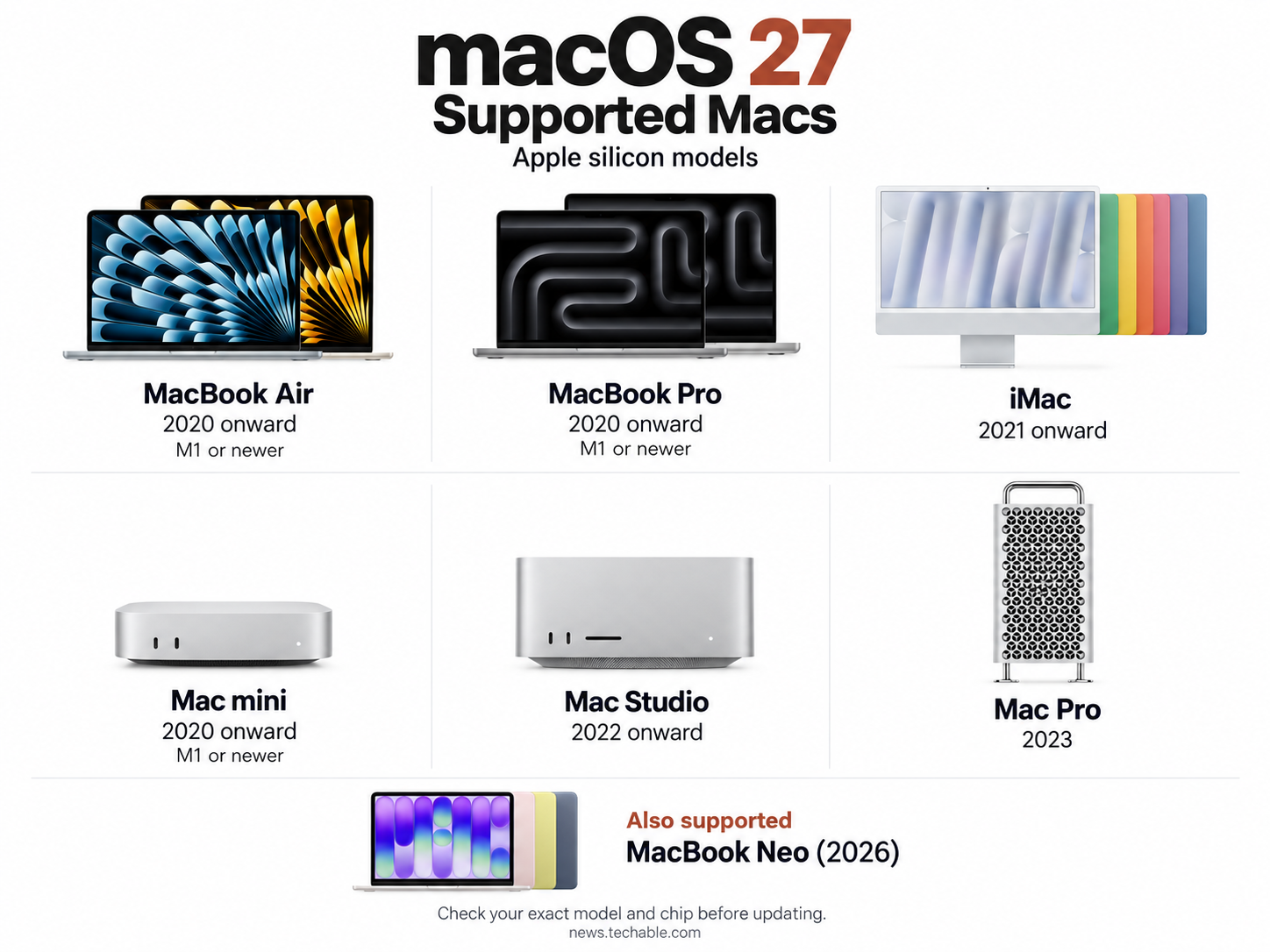
Apple says macOS 27 supports Macs with an M1 chip or newer. That includes Apple Silicon MacBook Air and MacBook Pro models from 2020 onward, the 2021-and-later iMac, the 2020-and-later Mac mini, Mac Studio models from 2022 onward, and the 2023 Mac Pro. Apple’s 2026 MacBook Neo is also supported.
If you are unsure which Mac you own, start by checking your current macOS version and identifying the exact hardware before updating. Techable’s Apple specs and model lookup can also help distinguish similar-looking Macs.
These Intel Macs stop at macOS Tahoe.
Several late Intel Macs that remain compatible with macOS Tahoe will not move to macOS 27. The list includes the 2020 13-inch MacBook Pro with four Thunderbolt 3 ports, the 2019 16-inch MacBook Pro, the 2020 27-inch iMac, and the 2019 Mac Pro.
That does not make those computers unusable overnight. Apple has said Intel-based Macs will continue receiving security updates for a period after the platform transition. But the lack of future major macOS releases will increasingly matter for software compatibility, resale value, and how long buyers expect those systems to remain practical.
Rosetta is nearing the end of the transition.
Apple is also winding down Rosetta, the translation technology that lets Apple Silicon Macs run many Intel-only applications. Apple says macOS 27 is the final major release with full Rosetta support. Developers with Intel-only Mac apps are being told to move to Apple silicon native or universal builds.
For most consumers, the immediate question is simple: before installing a major macOS update, check whether any older application you depend on still requires Intel translation. That matters more for specialized business, creative, and legacy software than for mainstream apps that have already moved to Apple silicon.
What this means for the used-Mac market
The compatibility cutoff strengthens the divide between Intel and Apple silicon Macs in the secondary market. Buyers comparing similarly priced machines should pay attention not only to processor speed and memory but also to the remaining software support window. That is one reason Apple silicon has become a more important dividing line in used-Mac pricing.
For more on that shift, see how Apple silicon changed Mac resale economics.
Sources
Apple Developer: Upcoming changes to Rosetta support for Intel-based macOS apps. MacRumors: Apple Announces macOS Golden Gate Release Date.