Apple Pulled the Cheapest Mac mini. The Real Story is Demand.
Apple's removal of the 256GB Mac mini raised the entry price and tightened supply at the low end. Jonathan Brax looks at what Techable is seeing in demand and what it may mean for used-market pricing.
Technically reviewed by Jonathan Brax, Founder, Techable
By Jonathan Brax, Founder of Techable and SellMac
Apple did not just remove a storage option. It raised the entry point, exposed a real shortage, and signaled how much demand AI and automation workflows are putting on the Mac mini market.
I still answer calls myself.
That might sound small, but it gives me a front-row seat to what people are actually building with their Macs. Lately, I have spoken to quite a few customers using Mac minis for AI workflows, automation setups, local tools, and clawbot-style builds. Some of the things people are planning are genuinely inspiring.
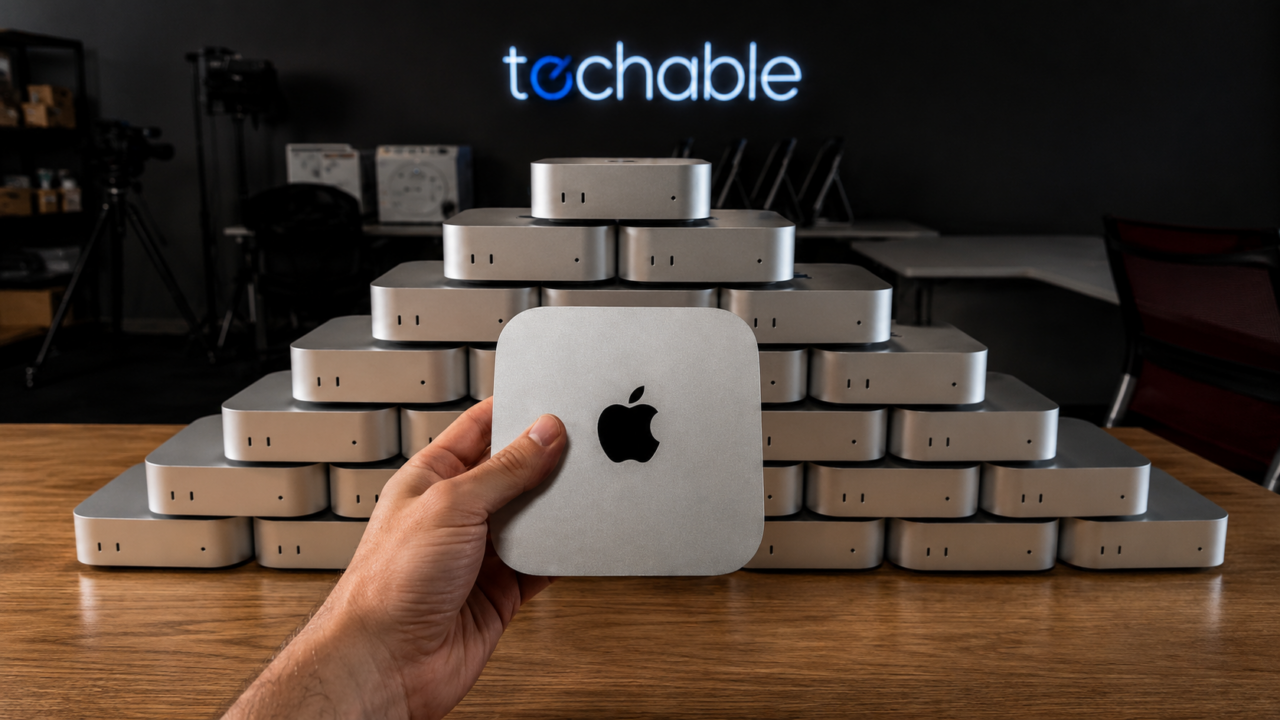
The reel below is the joke version of that same trend. A pyramid of Mac minis, a “super clawbot,” and a quick snapshot of the demand I am talking about.
The relevant point for the Mac mini market is that AI and automation have created new uses for compact Macs. Customers are using them for local tools, automation setups and always-on workloads that were less common a few years ago.
That matters because Mac mini demand is no longer driven only by traditional desktop buyers. The same hardware is also being considered for development, local AI, automation and small-server workloads.
That is the lens I look through when Apple quietly removes the cheapest Mac mini.
Because this is not just about storage.
It is about demand.
At Techable, we have seen that demand firsthand. We have been selling certain Mac mini configurations over MSRP because of the shortage, and even at those prices, we cannot keep them in stock. I am not saying that to brag. I am saying it because it shows how unusual this cycle is.
As of May 5, 2026, Apple.com was showing roughly a month out for base Mac mini models, while high-spec models were still showing delivery estimates around 10 to 12 weeks. When customers need a machine now, that kind of wait changes the market.
Apple recently stopped selling the 256GB Mac mini. The previous entry-level model started at $599 with the M4 chip, 16GB of unified memory, and 256GB of storage. That option is now gone. Apple’s current Mac mini buy page now lists standard configurations starting at 512GB storage, and Apple’s Mac mini specs page does not list a 256GB storage option.
Same Mac mini family. Better storage floor. Higher cost to get in.
From where I sit, buying, selling, refurbishing, and watching Apple devices move through the market every day, this is not just Apple cleaning up a product page.
This is Apple resetting the baseline.
I Look at Macs Differently Than Most People
Most people look at a Mac when it launches.
I look at what happens after the launch hype fades.
Which models hold value? Which specs age well? Which configurations customers regret buying? Which ones need to be discounted just to move?
That is why this 256GB change stood out to me.
A Mac can be fast and still feel limited.
That is the trap with a lot of lower-storage Apple devices. The chip is powerful. The machine feels premium. The customer thinks they made the smart budget choice.
Then a year or two later, the storage becomes the weak point.
More cloud storage. More external drives. More disk full warnings. Lower resale value.
That is not always obvious on day one, but it becomes very obvious later.
The 256GB Mac mini Was Always a Compromise
I have never loved 256GB Macs from a resale standpoint.
They sell. Of course they sell. Apple Silicon is powerful, and the Mac mini is still one of the best desktop values Apple has made in years.
But 256GB fills up fast.
For a basic office setup, school workstation, front desk computer, media server, or light home machine, it can be enough. The problem is that enough changes quickly.
macOS gets bigger. Apps get bigger. Photos pile up. Business files pile up. Creative tools pile up. AI tools and local workflows are only going to add more pressure.
The cheapest Mac is not always the best value Mac.
So when Apple removed the 256GB Mac mini, my reaction was not shock.
It was more like, yeah, this was probably coming.
Why Would Apple Do This?
Apple has not publicly given one clean explanation for removing the 256GB Mac mini.
But looking at the timing, the supply situation, and what we are seeing in the market, I think a few things are happening at once.
First, supply is tight. TechRadar reported that the $599 Mac mini with 256GB storage had already been out of stock before the change, and that Apple was still quoting extended delivery estimates after the 512GB model became the new entry point.
Second, the shortage is showing up in real resale pricing. At Techable, we have been able to sell certain Mac mini configurations over MSRP because customers do not always want to wait weeks or months. They need the machine now. That is not normal for most current Apple desktops, and it tells you how unusual this demand cycle is.
Third, demand for the Mac mini appears stronger than expected. Business Insider reported that rising Mac mini demand has been tied to AI-related uses, with Apple removing the previous 256GB model and making the 512GB version the new entry point.
That matches what I am hearing directly from customers.
People are not just buying computers to browse the web anymore. They are buying machines to build, automate, experiment, and create leverage.
Fourth, this looks connected to broader component pressure. TechRadar also tied the move to supply constraints and pressure around RAM and storage availability.
And fifth, this simplifies the lineup.
If the lowest-priced model is harder to supply, lower-margin, and more likely to feel limited over time, it becomes the easiest model to cut.
That is good for Apple.
It is probably better for a lot of customers too.
But it still raises the entry price by $200.
That is the part people should not ignore.
Apple Made the Minimum Better, But Also More Expensive
There is a fair way to defend Apple here.
A 512GB Mac mini is a better starting point than a 256GB Mac mini. I actually agree with that.
For a desktop Mac in 2026, 512GB feels like a much more realistic baseline. If you are buying a machine you plan to use for years, the extra storage matters.
But Apple did not make the 512GB model cheaper.
Apple removed the cheaper model.
That is the difference.
MacRumors reported that Apple stopped offering the 256GB Mac mini worldwide, moving the U.S. starting price from $599 to $799.
So yes, the new base model is better.
But the cheapest way into a new Mac mini is also gone.
For students, families, schools, small businesses, and anyone trying to stretch a budget, that matters.
What This Means for the Refurbished Market
This is where it gets interesting for us.
When Apple removes a base configuration during a shortage, it changes the market fast.
The 256GB M4 Mac mini does not suddenly become a bad machine. At the right price, it can still be a great buy. But the market will treat it differently.
The 512GB models become the safer long-term choice. The 256GB models become the budget play.
At the same time, availability matters. When Apple is quoting weeks or months for delivery, buyers start looking at what is available now. That is why we have been able to sell Mac minis over MSRP and still struggle to keep them in stock.
That does not happen unless demand is real.
At Techable, we already see this across Apple devices. Storage matters more than people think. Higher-storage models are usually easier to sell, easier to recommend, and easier for customers to live with longer. That is why refurbished Mac mini options need to be priced honestly, especially when Apple availability is stretched.
The 256GB models need to win on price.
The higher-spec models need to be understood as availability-driven inventory.
That is not a bad thing. It just needs to be clear.
My Take If You Are Buying a Mac mini
If you are buying new from Apple, I like the 512GB starting point better.
It is more usable. It should age better. It gives people more breathing room.
But if you are open to buying refurbished or used, this change could create opportunity.
As the market adjusts, 256GB M4 Mac minis may become solid budget buys if they are priced correctly. Not everyone needs a huge SSD. Some people just need a fast, reliable desktop for everyday work.
The key is simple.
Do not overpay for the lower-storage model.
For anyone comparing current market pricing, we keep M4 Mac mini models at Techable updated with available configurations.
My Take If You Are Selling a Mac mini
If you own a 256GB Mac mini, I would not panic.
It still has value.
But I would be realistic.
Once Apple moves away from a configuration, buyers start comparing it differently. Higher-storage models usually hold value better, especially once the market starts treating 512GB as the new normal.
That does not mean every 256GB owner needs to rush and sell today.
It does mean the machine has to be priced correctly.
For anyone trying to understand what their Mac mini is worth, you can sell your Mac mini through SellMac and get a quote based on the model, specs, and condition.
For schools, businesses, or IT teams with multiple machines, SellMac also has a bulk Mac trade-in option for larger lots.
The Bigger Picture
Apple is slowly raising the minimum standard across the Mac lineup.
More memory. More storage. Fewer truly cheap entry points.
Some of that is good. Nobody wants to buy a new Mac and feel boxed in immediately.
But it also means Apple’s affordable products keep becoming less affordable at the front door.
That is why I think the refurbished market becomes more important, not less.
A lot of people want Apple quality, but they do not always need to buy directly from Apple at full retail. They need the right machine, tested properly, priced fairly, and backed by a company that actually understands the product. That is the lane Techable Certified devices are meant to fill.
Final Thoughts
The Mac mini is still one of Apple’s best machines.
I am not bearish on it at all.
But Apple removing the 256GB model is a reminder that the cheapest Apple product today might not be available tomorrow.
For buyers, it means pay closer attention to storage.
For sellers, it means lower-storage models may need to be priced more aggressively.
For the used market, the bigger question is whether these newer workloads are changing which Mac mini configurations people seek out.
The more useful signal is what these new workloads are doing to demand for particular configurations. When supply tightens, the effect shows up quickly in availability and in used-market pricing.
And the people who learn how to use these systems now are going to have an advantage.
Thanks for reading,
Jonathan
Sources
Apple’s current Mac mini buy page lists standard Mac mini configurations starting with 512GB storage, and Apple’s Mac mini specs page does not show a 256GB storage option. MacRumors reported that Apple stopped offering the 256GB Mac mini worldwide, moving the U.S. starting price from $599 to $799. TechRadar reported that the 256GB model had been out of stock before the change and connected the timing to supply constraints. Business Insider reported that Mac mini demand has been boosted by AI-related uses.